

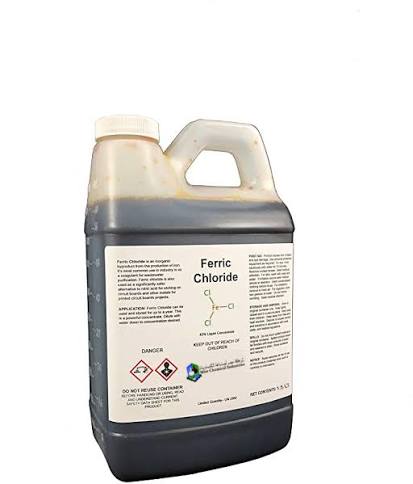
Description
Product Specifications
| Property | Specification |
|---|---|
| Chemical Name | Ferric Chloride |
| Chemical Formula | FeCl₃ |
| CAS Number | 7705-08-0 |
| Appearance | Dark brown liquid or crystalline solid |
| Molecular Weight | 162.20 g/mol |
| Purity | Industrial Grade (typically 40–45% solution for liquid form) |
| pH | < 2 (strongly acidic solution) |
| Solubility | Highly soluble in water |
| Density | ~1.40–1.50 g/cm³ (liquid form, varies by concentration) |
| Packaging | 25 kg bags (solid), 200 L drums, bulk tankers |
| Storage | Store in corrosion-resistant containers in a cool, dry, well-ventilated area away from moisture and incompatible materials. |
Uses
Ferric Chloride is widely used across multiple industrial sectors, including:
- Municipal drinking water treatment as a coagulant.
- Wastewater and industrial effluent treatment.
- Removal of phosphates and heavy metals from water systems.
- Sludge dewatering and conditioning processes.
- Etching agent in printed circuit board (PCB) manufacturing.
- Chemical synthesis and industrial processing applications.
- Odour control in wastewater treatment plants.
- Mining and mineral processing operations.
- Textile and dye wastewater treatment.
- Industrial cooling water treatment systems.
Benefits
- Highly efficient coagulant for water clarification.
- Effective removal of suspended solids and organic contaminants.
- Strong phosphate and heavy metal precipitation capability.
- Performs well across a wide range of water conditions.
- Reduces turbidity and improves water quality.
- Cost-effective solution for large-scale treatment systems.
- Reliable performance in municipal and industrial applications.
- Supports compliance with environmental discharge standards.
- Available in both liquid and solid forms for operational flexibility.
- Widely adopted in global water treatment infrastructure.
Safety Information
- Corrosive material. Causes severe burns to skin and eyes.
- Wear full PPE including chemical-resistant gloves, goggles, face shield, and protective clothing.
- Use only in well-ventilated areas and avoid inhalation of vapours or mist.
- Store in corrosion-resistant containers away from moisture, alkalis, and incompatible substances.
- Avoid contact with metals that may corrode upon exposure.
- In case of eye contact, rinse immediately with plenty of water and seek urgent medical attention.
- In case of skin contact, wash immediately with water and remove contaminated clothing.
- If inhaled, move to fresh air and seek medical assistance if symptoms occur.
- In case of spills, contain using appropriate materials and neutralize where applicable under safety procedures.
- Always consult the latest Safety Data Sheet (SDS) before handling, storage, or transport.

Reviews
There are no reviews yet.