
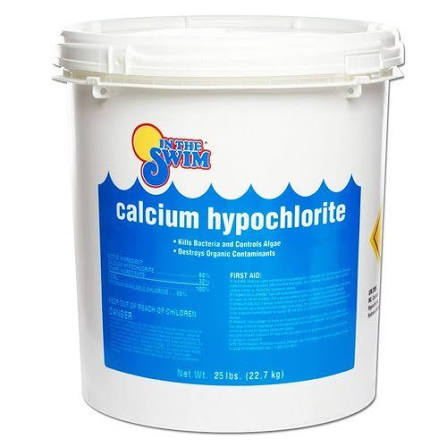
Description
Product Specifications
| Property | Specification |
|---|---|
| Chemical Name | Calcium Hypochlorite |
| Chemical Formula | Ca(ClO)₂ |
| CAS Number | 7778-54-3 |
| Appearance | White to off-white powder or granules |
| Available Chlorine | Typically 65%–70% |
| Molecular Weight | 142.98 g/mol |
| Solubility | Soluble in water (reactive) |
| pH | Alkaline in solution |
| Density | ~2.35 g/cm³ |
| Packaging | 45 kg drums or sealed plastic containers |
| Storage | Store in a cool, dry, well-ventilated area away from heat, moisture, organic materials, acids, and reducing agents. Keep tightly sealed. |
Uses
Calcium Hypochlorite is widely used across various sectors, including:
- Drinking water disinfection and purification.
- Swimming pool sanitation and maintenance.
- Wastewater and sewage treatment.
- Industrial water treatment systems.
- Emergency disinfection of contaminated water supplies.
- Surface and equipment sanitation in industrial facilities.
- Bleaching agent in textile and paper industries.
- Odour control in wastewater systems.
- Food processing facility sanitation (controlled applications).
- Agricultural and livestock facility hygiene management.
Benefits
- Highly effective disinfectant with strong chlorine release.
- Provides rapid microbial control in water systems.
- Stable solid form with longer shelf life compared to liquid chlorine.
- Easy to store, transport, and handle under proper conditions.
- Effective across a wide range of water treatment applications.
- Cost-efficient solution for large-scale sanitation needs.
- Improves water safety and quality in municipal systems.
- Suitable for both routine and emergency treatment scenarios.
- Reliable performance in varying environmental conditions.
- Widely used and trusted in global water treatment industries.
Safety Information
- Strong oxidizing agent. Keep away from organic materials, acids, and reducing agents.
- Wear full PPE including gloves, goggles, face shield, and protective clothing.
- Avoid inhalation of dust and contact with skin or eyes.
- Do not mix with acids or ammonia-containing substances as hazardous gases may form.
- Store in tightly sealed containers in a cool, dry area away from moisture and heat.
- Ensure proper ventilation when handling or preparing solutions.
- In case of eye contact, rinse immediately with plenty of water and seek urgent medical attention.
- In case of skin contact, wash thoroughly with soap and water.
- If inhaled, move to fresh air immediately and seek medical attention if symptoms persist.
- Always consult the latest Safety Data Sheet (SDS) before handling, storage, or transport.

Reviews
There are no reviews yet.