
Description
Product Specifications
| Property | Specification |
|---|---|
| Chemical Name | Sodium Thiosulfate |
| Chemical Formula | Na₂S₂O₃·5H₂O (pentahydrate, common form) |
| CAS Number | 10102-17-7 |
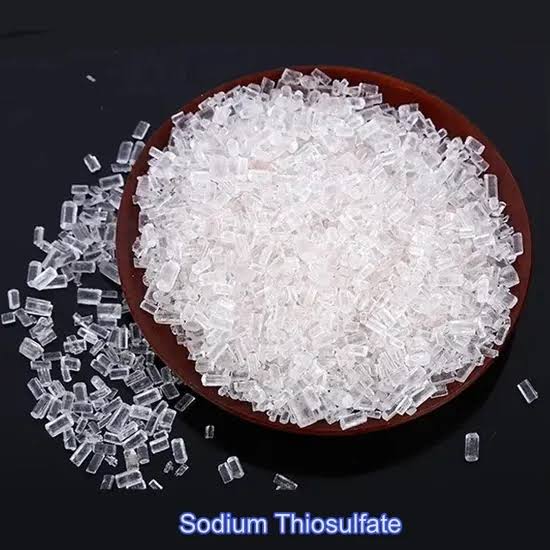
| Appearance | White crystalline solid |
| Molecular Weight | 248.18 g/mol (pentahydrate) |
| Purity | ≥ 98% (Industrial Grade) |
| Solubility | Highly soluble in water |
| pH | 6.0–8.0 (aqueous solution) |
| Density | ~1.7 g/cm³ |
| Packaging | 25 kg bags or drums |
| Storage | Store in a cool, dry, well-ventilated area away from moisture, acids, and strong oxidizing agents. |
Uses
Thiosulfate is widely used across multiple industrial sectors, including:
- Dechlorination in drinking water and wastewater treatment.
- Neutralization of residual chlorine after disinfection processes.
- Photographic processing and image fixing applications.
- Chemical synthesis and laboratory reagent use.
- Gold leaching processes in mining (alternative to cyanide in some systems).
- Industrial water treatment and boiler systems.
- Textile and paper processing applications.
- Analytical chemistry and titration procedures.
- Medical and pharmaceutical auxiliary applications (controlled use).
- Aquaculture water treatment and detoxification.
Benefits
- Highly effective chlorine neutralizing agent.
- Safe and stable alternative for dechlorination processes.
- Supports protection of aquatic environments in treated water discharge.
- Easy to dissolve and apply in water treatment systems.
- Reliable performance in industrial and laboratory applications.
- Compatible with a wide range of water treatment chemicals.
- Cost-effective solution for residual oxidant removal.
- Widely used across municipal and industrial sectors.
- Reduces environmental impact of treated effluents.
- Stable under normal storage conditions.
Safety Information
- Wear appropriate PPE including gloves, goggles, and protective clothing during handling.
- Avoid inhalation of dust and direct contact with eyes or skin.
- Use in well-ventilated areas to minimize exposure.
- Store in tightly sealed containers in a cool, dry area away from acids and oxidizing agents.
- Do not mix with strong acids as sulfur dioxide or toxic gases may be released.
- In case of eye contact, rinse immediately with plenty of clean water and seek medical attention if irritation persists.
- In case of skin contact, wash thoroughly with soap and water.
- If inhaled, move to fresh air and seek medical attention if symptoms occur.
- Clean spills carefully and avoid environmental release where possible.
- Always consult the latest Safety Data Sheet (SDS) before handling, storage, or transport.

Reviews
There are no reviews yet.